P2P Crypto Risks in Indonesia: Why Regulated On-Ramps Are Safer

Product Manager

Overview: Understanding P2P Crypto Risks in Indonesia
Buying crypto through P2P can appear straightforward: find a counterparty, pay in IDR, and receive crypto. But the biggest risk is not always the crypto transaction itself. It can be the payment counterparty, source of funds, or transaction chain behind the payment.
P2P crypto is not inherently unsafe, but it can expose users to counterparty, payment fraud, and compliance risks. Regulated on-ramps can reduce some of these risks by providing more structured identity, payment, and compliance controls.
This matters in a growing market. OJK reported 22.40 million crypto consumer accounts and IDR 23.01 trillion in crypto transaction value in May 2026. The scale makes safer fiat to crypto infrastructure increasingly important for users and businesses operating in Indonesia.
Key Takeaways on P2P Crypto and Regulated On Ramps
P2P crypto involves transacting with another individual, creating additional counterparty exposure.
Third party payments, fake confirmations, and off-platform transactions can increase payment risk.
P2P risk can be difficult to identify when the source and wider transaction chain are not visible.
Regulated on-ramps can provide structured KYC, AML, transaction monitoring, and payment controls depending on the provider.
Regulation does not eliminate every risk, but it can add more structure and accountability to fiat-to-crypto transactions.
What Is P2P Crypto Trading?
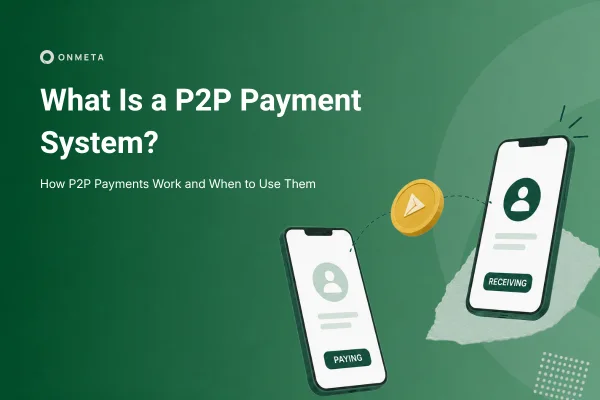
P2P crypto trading allows users to buy or sell cryptocurrency directly with another person, usually through a marketplace or escrow-based platform, rather than purchasing through a direct fiat-to-crypto on-ramp.
The basic transaction looks like:
Buyer → P2P marketplace → Counterparty → IDR payment → Crypto
The important distinction is counterparty exposure. With P2P, the fiat payment is part of a transaction with another individual rather than a direct crypto payment infrastructure provider.
A marketplace may provide escrow and other safeguards, but users still need to pay attention to who is sending or receiving funds and whether the payment details match the transaction.
For a more detailed understanding of this model, read our guide to P2P Payment Systems and How They Work.
5 P2P Crypto Risks Indonesian Users Should Know
The risks of P2P crypto depend on the platform, counterparty, and payment method. Some of the most important risks occur around the fiat payment rather than the crypto asset itself.
1. Third-Party Payment Fraud
The person sending the IDR payment may not always be the same person participating in the crypto trade.
This can make it difficult to understand the actual source of the funds. A user may receive a seemingly legitimate payment without knowing whether another individual or account is involved in the wider transaction.
2. Triangular Fraud
Triangular fraud involves an additional party who may not be visible to the legitimate P2P participant.
The transaction can look like:
Victim → Scammer → P2P Counterparty
A scammer can potentially use another person's funds to complete a P2P transaction. The legitimate participant receiving the payment may have no knowledge of how those funds originated.
3. Banking and Payment Restrictions
P2P crypto transactions do not automatically result in restrictions on a user's bank account.
However, when funds become associated with suspected fraud, an investigation or payment dispute can potentially create banking complications or restrictions, depending on the circumstances and applicable processes.
The important issue is therefore the source and transaction history of the payment rather than simply whether crypto was involved.
4. Fake Payment Confirmations
A counterparty may attempt to convince a seller that payment has been completed before the money has actually settled.
Common warning signs include:
Edited screenshots
Fake payment receipts
False payment sent claims
Pressure to release crypto quickly
Users should confirm receipt through their own bank or payment service rather than relying solely on screenshots or messages from the counterparty.
5. Off-Platform Transactions
Moving a P2P transaction outside the marketplace can remove some of the safeguards available through the platform.
Requests to communicate through Telegram or WhatsApp, bypass escrow, accept payments from unrelated accounts, or follow unusual payment instructions should be treated carefully.
Why P2P Crypto Risks Are Difficult to Detect
P2P transaction risk often comes from missing context: the payment may look legitimate on its own even when the wider transaction chain contains suspicious activity.
Identifying risk can require multiple signals to be considered together:
Customer identity
Payment source
Account history
Transaction frequency
Transaction relationships
Wallet activity
Unusual transaction behaviour
This is where transaction monitoring becomes useful. Rather than looking only at whether an individual payment succeeded, monitoring systems can assess activity against a broader set of risk indicators.
Not every unusual transaction is fraudulent. The purpose of monitoring is to provide enough context to identify transactions that may require additional review.
Why Regulated Crypto On-Ramps Can Be Safer
Regulated on-ramps are not risk-free. They can be safer because they move users from an unknown counterparty relationship into a more structured payment and compliance environment.
Indonesia's crypto market now operates under OJK oversight. As of May 2026, OJK reported 32 licensed entities in the crypto asset trading ecosystem, including two crypto exchanges and 26 Digital Financial Asset Traders.
Risk Area | P2P Crypto | Regulated On Ramp |
Counterparty | Individual | Platform or infrastructure |
Identity | Varies | KYC based |
Payment flow | User to user | Structured |
Compliance | Varies | Provider dependent |
Transaction monitoring | Varies | Provider dependent |
Transaction records | Varies | Typically structured |
Support | Varies | Formal provider process |
The difference can be understood through the transaction flow:
P2P:
Unknown counterparty → Payment → Crypto
Regulated on-ramp:
User → KYC → Payment → Compliance and risk checks → Crypto
The second model does not guarantee that fraud cannot happen. Its advantage is the additional structure around identity verification, payment processing, AML controls, transaction monitoring, and record-keeping.
How Does a Regulated Crypto On Ramp Work?
A crypto on-ramp allows users to convert fiat currency such as IDR into cryptocurrency through a structured payment and settlement process.
A typical transaction follows:
1. Select crypto
↓
2. Complete KYC
↓
3. Pay in IDR
↓
4. Payment and compliance checks
↓
5. Crypto conversion
↓
6. Wallet settlement
The exact process and controls depend on the provider.
OnMeta supports INR, PHP, and IDR on and off ramp flows, with local payment methods including QRIS in Indonesia. Businesses can integrate the infrastructure through APIs or an embedded widget alongside KYC and compliance capabilities.
For a deeper explanation of the infrastructure, read What Are Fiat On Ramps and Off Ramps?.
How to Choose a Safer Crypto On Ramp in Indonesia
Choosing a crypto exchange or on-ramp in Indonesia should involve more than comparing the price of USDT or another digital asset.
Check these areas before using or integrating a provider:
Regulatory status: Verify who operates the service and which regulatory framework applies.
KYC: Understand how users are identified and verified.
IDR payment rails: Check how fiat payments are collected and processed.
AML and monitoring: Understand what risk and transaction monitoring controls exist.
Transaction records: Check whether transaction status and records are available.
Customer support: Understand what happens when a payment fails or is flagged.
Third party payments: Avoid arrangements involving unrelated payment accounts.
For more detail on these controls, read our guide to KYC, AML and Crypto Payment Compliance.
P2P vs Regulated On Ramp: Which Is Safer in Indonesia?
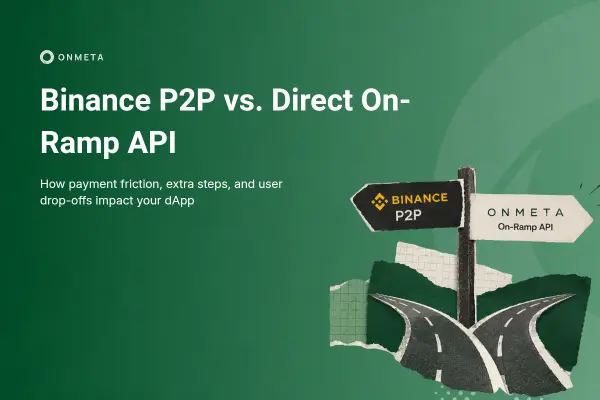
For users primarily concerned with counterparty, payment source, and compliance risks, a regulated on-ramp can provide a safer and more controlled alternative to direct P2P transactions.
That does not mean regulated services eliminate risk. Crypto price volatility, scams, cybersecurity incidents, operational failures, and financial crime can still occur. The advantage is greater structure and accountability around the fiat-to-crypto transaction.
Conclusion: Choosing a Safer Fiat to Crypto Route in Indonesia
P2P crypto is not inherently unsafe, but users need to assess more than the crypto asset itself. The counterparty, source of funds, and payment flow can introduce risks that may not be obvious from the transaction alone.
For users and businesses prioritising stronger identity checks, structured IDR payment flows, and compliance infrastructure, a regulated on-ramp can provide a more controlled route. OnMeta supports IDR on- and off-ramp infrastructure with local Indonesian payment rails, KYC, and compliance capabilities.
FAQs: P2P Crypto and Crypto On Ramps in Indonesia
Is P2P Crypto Safe in Indonesia?
It can be, but P2P transactions involve additional counterparty and payment risks. Using platform safeguards and avoiding third-party or off-platform payment arrangements can reduce exposure.
What Are the Biggest P2P Crypto Risks?
Key risks include third-party payments, fraud-linked funds, fake payment confirmations, triangular fraud, social engineering, and transactions moved outside established marketplace processes.
Can P2P Crypto Transactions Cause Banking Problems?
Transactions associated with suspected fraud can potentially lead to payment disputes, investigations, or restrictions depending on the circumstances and applicable banking procedures.
Are Regulated Crypto On Ramps Safer Than P2P?
They can reduce certain counterparty and payment risks through structured KYC, AML, transaction monitoring, payment, and record-keeping controls. They do not eliminate every crypto-related risk.
What Should I Check Before Using a Crypto Exchange in Indonesia?
Check the provider's regulatory status, KYC requirements, IDR payment methods, AML and transaction monitoring controls, transaction records, and customer support process.
Last Updated: August 2026
Author